EPO2.1b_F1
EPO2.1b
ID3
LocationNorway
Approximate number of models23
Approximate size132 GB
Experimentally produced objects for the purpose of the TEMPA 3D project. Experiments were held in January and November 2024, and included engraving of soapstone from Rennesøy and Målslev and sandstone from Kamyana Mohyla. Experimentally produced objects were specifically designed to look at the technological traces of the surface modification processes via image-based 3D modeling.
Dataset includes 23 models of the experimentally produced objects. Among other this includes flint and quartz marks on soapstone, sandstone, bone, and antler as well as experimental replicas of Kamyana Mohyla churinga and soapstone line sinkers. For most engravings the modification time was recorded along with the production tool. The accuracy of the models in the dataset are around 0.1 mm, the resolution — around 0.03 mm.
ID
EPO2.1b
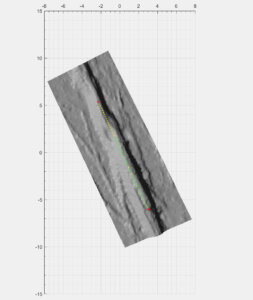
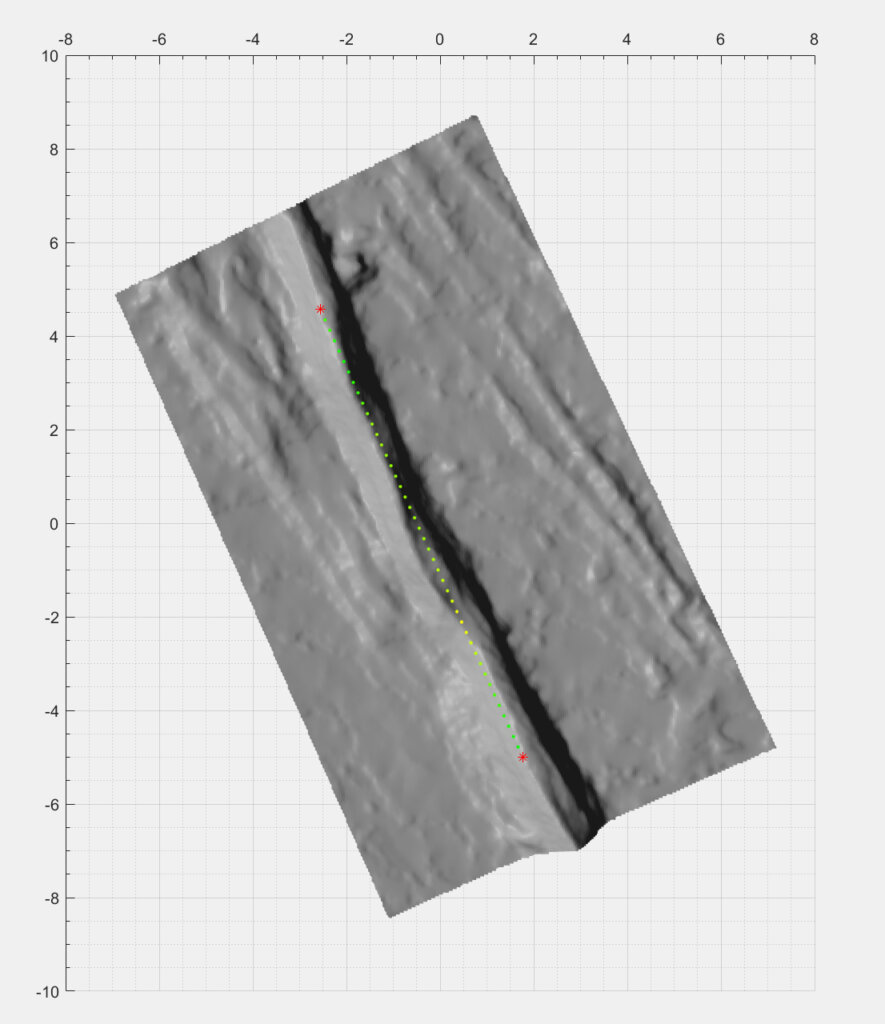
A flat bottom surface of the experimentally produced piece made of the Rennesøy soapstone. Incised with a flint burin point for the recorded time — 30s, 60s, 90s, and 120s.
Information
Artifact material
Soapstone
Artifact is experimentally produced
Yes
Tool material [known]
Flint
Tool type [known]
Burin
Surface modification strategy description
Incising
Number of slices
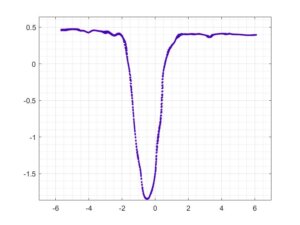
42
Aperture
79°
Depth
0.8310587413 mm
FWMH
0.8880932381 mm
Extremum points, [MP]
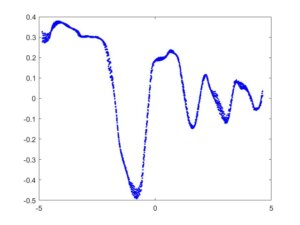
1.952380952
Frequency of MP change per mm
0.8571428571
Depth / FWMH ratio
0.9357787062
Comments on the slices analysis
Engraved during 30s to test the reaction of soapstone surface on a particular action with a particular tool. The engraving process is hardly controllable as burin slides on the surface and struggles to produce a single engraved line
Link to the data
N/A